
Strategy · 9 min read
Is a Facebook or Instagram Page Enough, or Do You Need a Website?
A decision guide for Australian small businesses: when social media is enough for now, when a website becomes necessary, and how the two channels should work together.
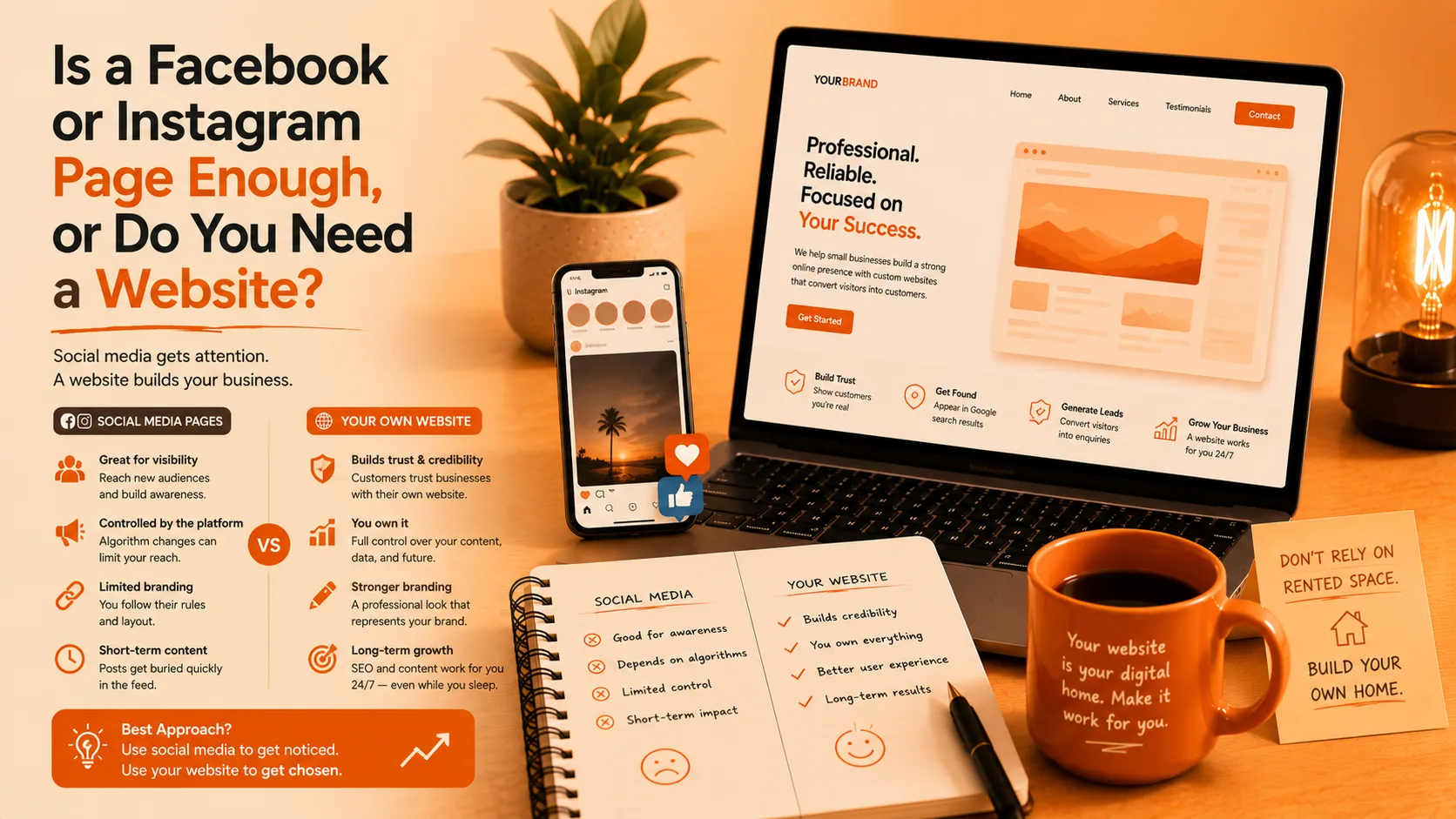
Social media and a website solve different jobs. Instagram, Facebook, LinkedIn, or TikTok can create attention and conversation. A website gives customers a stable place to understand the offer, compare options, verify details, and take the next step. The question is not which channel wins; it is which customer journey you need now.
What social media does well
- Publish frequent updates, behind-the-scenes work, and timely offers without editing a full site.
- Reach existing followers and invite comments, messages, shares, and community interaction.
- Test content themes and customer questions before turning them into permanent website pages.
- Show recent activity for businesses where freshness and personality influence trust.
What an owned website adds
- A stable address and layout you control instead of a profile shaped by a platform's algorithm and rules.
- Pages built for search intent, such as a specific service, location, question, or case study.
- Space for a clear offer, detailed proof, FAQs, policies, and a focused enquiry or purchase path.
- Analytics and integrations designed around your goals rather than a platform's engagement goals.
- A destination for referrals, advertising, email, printed materials, and social profile links.
You probably need a website now if…
- Customers search for your service, business name, or location before they contact you.
- You offer several services or need more explanation than a profile bio and pinned posts can hold.
- You run campaigns and need one focused destination with a clear action and consistent message.
- Prospects repeatedly ask for prices, process, availability, examples, policies, or booking details.
- Your competitors provide useful search pages while your business is represented only by directory or social listings.
When a website can reasonably wait
A website may not be the first priority when you are testing an offer, serving a small referral network at full capacity, or still changing the business model weekly. A current business profile and accurate contact details can cover the temporary gap. Set a review point: the need changes when you seek predictable discovery, paid traffic, clearer qualification, or growth beyond referrals.
Choose the smallest useful website
You do not need to publish every possible page on day one. A focused site can explain who the service is for, what problem it solves, why the business is credible, what happens next, and how to make contact. Add deeper service pages, resources, or integrations when customer questions and search demand justify them.
A practical channel journey
- Social post: earn attention with a useful idea, current example, or answer to a real question.
- Website page: continue the same promise with more context, relevant proof, and no feed distractions.
- Action: offer one appropriate next step such as an enquiry, booking, download, or purchase.
- Follow-up: use email, a thank-you page, or a human reply to set expectations clearly.
- Feedback loop: turn recurring enquiries into better social content and stronger website answers.
Common mistakes when combining the two
- Linking to a generic homepage when the post discusses one specific service or offer.
- Copying short social captions into a website without adding the detail a decision-maker needs.
- Using different names, contact details, claims, or offers across profiles and the website.
- Embedding heavy feeds that slow the site instead of selecting a few relevant examples.
- Building an audience on one platform without keeping a customer list or destination you control.
Decision checklist
List how customers currently discover you, what they need to verify, which questions delay contact, and what action creates business value. If a social profile answers those needs reliably today, improve it. If the journey breaks at search, explanation, trust, qualification, or conversion, a focused website fills that gap.
Ready to Get Started?
Map the path from discovery to contact, then choose the smallest website that fixes the missing step instead of replacing the social audience you already have.
Next article
What to Prepare Before Hiring a Web Designer (Content Checklist)