
Improve recognition
Repeated colours, type, shapes, and image treatment create visual memory beyond the primary logo.
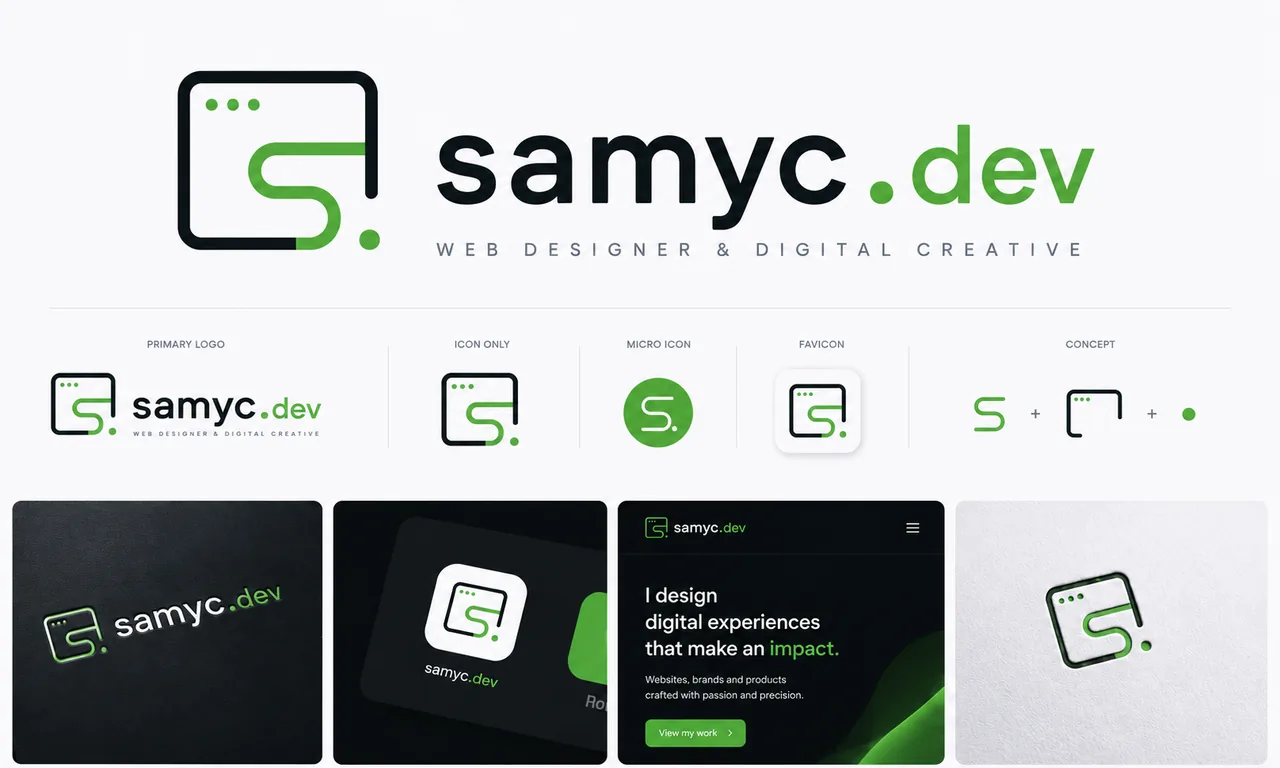
A brand identity is the visual system people use to recognise and understand a business. A logo is one part of that system, but it cannot do the whole job alone. Colour, typography, composition, imagery, supporting marks, tone, and usage rules need to work together across a website, proposal, social post, sign, or printed document.
The purpose is not to make every item look identical. It is to give the business a coherent visual language that can adapt without becoming unrecognisable. Samyc builds the identity around the audience, positioning, practical channels, and material the team will actually produce.
Businesses often accumulate a logo, several shades of the same colour, unrelated fonts, and one-off graphics created whenever a new need appears. That inconsistency slows decisions and can make an otherwise capable company look less established. Customers may not consciously identify the mismatch, but they experience the communication as less clear or less trustworthy.
A defined system reduces that friction. It gives the owner, designer, marketer, printer, and web developer a shared reference. New material starts from agreed rules instead of reopening basic visual decisions every time.
A logo may be enough for an early test, but it becomes restrictive once the business needs a website, presentation, social campaign, document template, signage, or packaging. Each channel has different dimensions and constraints. Without variants and rules, the logo is stretched, recoloured, crowded, or paired with inconsistent type.
A brand identity is useful when launching, repositioning, combining inconsistent legacy material, or preparing for growth. The depth should match the need: a small service business may need a compact toolkit, while a company with many teams and applications needs a more complete system.
Identity design supports recognition and execution. It cannot replace a strong offer, but it can help that offer appear consistent wherever people meet it.
Repeated colours, type, shapes, and image treatment create visual memory beyond the primary logo.
Consistent material signals that the business pays attention to how it presents information and delivers details.
Templates and rules reduce repeated decisions when creating a deck, post, proposal, or campaign asset.
A usable identity gives interface design a clear foundation instead of forcing the website to invent the brand from scratch.
Logo variants and flexible layout principles help the identity adapt to different formats without losing its character.
The deliverables are selected around real use cases. A concise identity can be more valuable than a large guideline document that nobody opens.
Depending on the agreed scope, Samyc can develop:
The process moves from business context to a usable system, so visual exploration remains connected to an agreed direction.
We clarify the audience, positioning, personality, competitors, existing equity, required applications, decision-makers, and timing.
Samyc researches relevant visual territory and presents a focused direction. This aligns the project before detailed logo and system work begins.
The chosen direction becomes logo variants, colour, type, composition, and agreed applications. Feedback is applied within the approved brief.
Final assets are organised for their intended uses, guidelines are documented at the agreed depth, and the system is presented for handover.
The three levels are starting points. The final scope reflects how many applications, concepts, and decision-makers the project actually involves.
For a small business that needs a credible core system for its first website and everyday communication.
Tailored estimate
For a business launching or repositioning across several customer touchpoints.
Tailored estimate
For organisations with unusual formats, multiple teams, sub-brands, campaigns, or broader implementation needs.
Tailored estimate
Identity work is estimated from the decision-making and production required, not from the logo file alone. Samyc confirms the concepts, revisions, applications, and final file formats included before work starts.
Printing, trademark searches, naming strategy, specialist copywriting, photography, illustration, or extensive rollout are only included when explicitly scoped.
No standalone brand-identity case study is currently published on this portfolio. Samyc offers the service based on the capabilities described above, but the website case studies are not presented as proof of a complete identity engagement.
You can ask for the relevant working examples during the project conversation. The scope and deliverables will still be agreed in writing before any commitment.
A logo is an identifying mark. A brand identity is the wider system that explains how the logo, variants, colour, typography, layout, imagery, and supporting elements work together. The system makes the mark usable and recognisable across real situations.
The number is agreed in the estimate because more concepts require more research, presentation, and evaluation. A focused route with a strong brief can be more productive than a large gallery of disconnected options. You will know what is included before work starts.
Yes, if the existing mark still represents the business. The project can organise the surrounding colour, typography, layout, variants, and guidelines instead of replacing it automatically. Any technical issues with the current files are reviewed during scoping.
The agreed handover lists the master and export formats appropriate to the deliverables. Typical needs may include vector logo files and web-ready exports, but exact formats depend on the applications. Third-party font or stock licences remain subject to their own terms.
Not by default. Naming strategy, legal clearance, and trademark registration are separate specialist activities. Samyc can design around an approved name, but does not replace legal advice or a formal trademark search.
Yes. Combining the scopes can make the transition from brand direction to interface more coherent. They are still itemised clearly so you can see which identity deliverables and which website deliverables are included.
Your next step
Share what the business does, who it needs to reach, which materials you use most, and what already exists. Samyc will recommend an identity scope based on those practical needs.